
If you’re planning to Organic vs Non-Organic Vegetables or buy organic vegetables in Delhi/NCR, you’ve probably asked the most practical question first: Are they really worth the extra price?
The honest answer is: sometimes organic will look costlier on the bill, especially when you compare it to the “cheap” sabzi you see in local markets. But the real comparison isn’t only about price per kilo. It’s about value per meal, wastage, residue risk and what your family ends up consuming every day.
In this blog, we’ll compare the visible cost (what you pay today) and the invisible cost (what you may pay later) when you buy organic vegetables in Delhi/NCR online, whether you’re in Noida, Delhi, or Gurgaon.
You Can View Our Video Also: How to differentiate between Organic & Non Organic Veggies?
What “Cheap” Vegetables Really Mean in a Market Comparison
When vegetables are priced very low in a mandi or local market, it usually reflects one or more realities:
- Chemical-dependent farming (fast growth, higher yield, lower farmgate cost)
- Higher wastage later (bruising, fast spoilage, water loss, rotting)
- Unknown residue exposure (especially in leafy vegetables)
- No traceability (you can’t verify how it was grown)
This is why cost comparison should not be “Organic vs Non-Organic Vegetables” as a label. It should be:
traceable clean food vs unknown chemical food.
Buy Organic vs Non-Organic Vegetables in Delhi/NCR: A Real-World Price Lens (With Examples)
To make this practical, let’s compare a few common kitchen items from an online organic store versus typical mandi/market pricing.
Example: Organic online prices (Eat Right Basket)
Here are a few Eat Right Basket vegetable prices currently listed online:
- Desi Tomato (500g) ₹58 (≈ ₹116/kg)
- Potato (1kg) ₹72
- Cauliflower (1pc/approx pack) listed around ₹55 – ₹65 depending on listing/size
- Palak (250g) ₹30 (≈ ₹120/kg)
- Methi (250g) ₹29 (≈ ₹116/kg)
- Onion (1kg) ₹76
Example: “Market cheap” pricing baseline (mandi/price trackers)
Now, mandi prices vary daily, but trackers regularly show lower base rates for conventional produce. For instance, price trackers for Delhi markets show lower wholesale/mandi ranges for key staples like potato and carrot
Also, during tomato spikes, even national averages can jump significantly, showing how unstable “cheap” can be. (mandi/market rate snapshots vary by date and market).
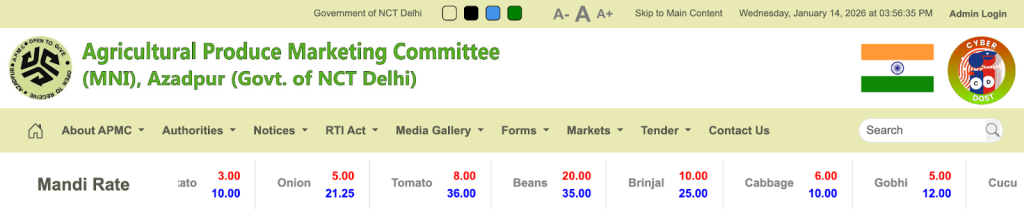
Important note: mandi rates are often wholesale. Retail prices in local markets typically add transport + sorting + wastage + shop margin. So the “cheap” you see may still not be as cheap once quality and wastage are accounted for.
The Hidden Maths Most People Miss (Wastage + Shelf Life)
Here’s the most common real-life scenario in Delhi, Noida, and Gurgaon kitchens:
Non-organic “cheap” basket
- You buy mixed vegetables at a low price
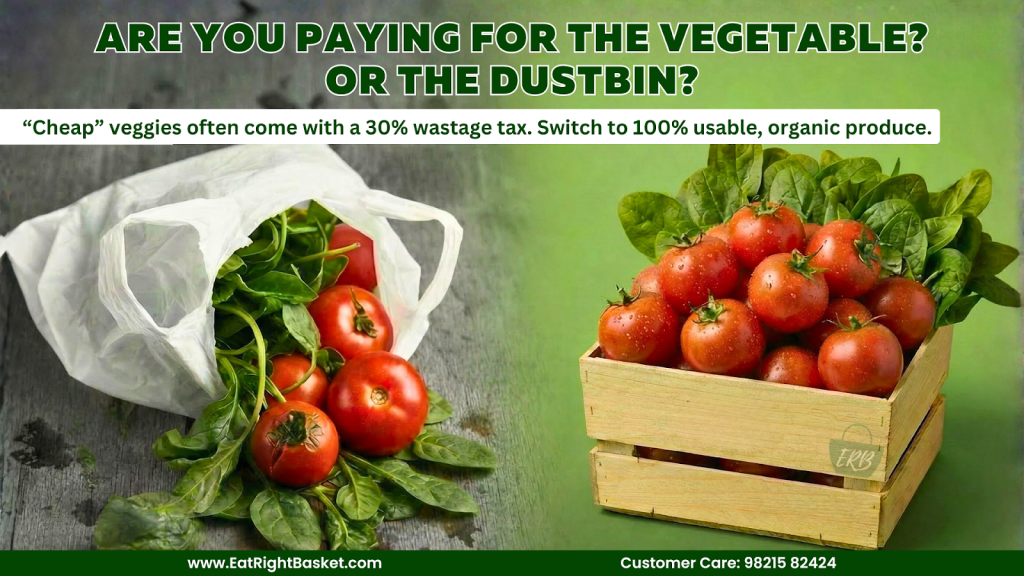
- 15 – 30% becomes waste (soft tomatoes, slimy greens, rotting corners, peeling loss, quick spoilage)
Organic “value” basket
- You pay more per kg. But you often see better usable produce, especially in greens and delicate vegetables.
- Taste and texture hold better when cooking is simple (dal-sabzi-chawal style).
So the effective cost becomes:
Effective cost = Price paid ÷ usable quantity
That’s why two families can spend the same monthly amount, but one still feels like they’re “always throwing vegetables away.”
The Bigger Cost: Pesticide Residue and Long-Term Health Spend
When people decide to buy organic vegetables in Delhi/NCR, they’re usually not only buying vegetables. They’re buying a better health.
Even if we keep this blog practical (not fear-based), the logic is simple:
- Chemical residue exposure is not a “one-time event”
- It’s a daily intake problem
- And small daily choices become long-term outcomes
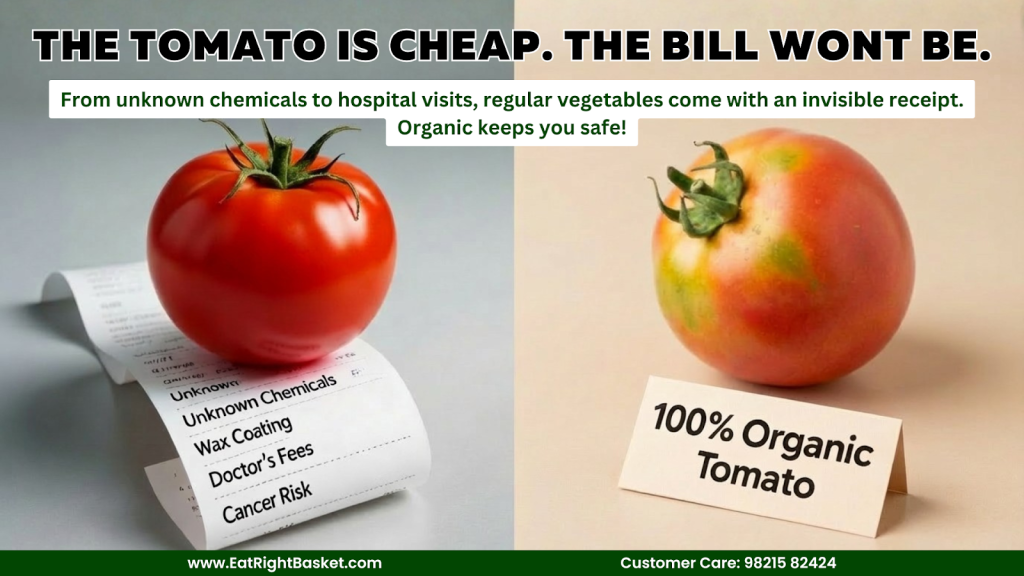
This is where organic may not look “cheaper” today, but can look smarter over years, especially for:
- kids and growing bodies
- elders with digestion and immunity concerns
- families already trying to eat cleaner (less packaged, more home-cooked)
ERB does not value Cheap Produce, It Offers True Value
Eat Right Basket is built around a straightforward promise: clean sourcing + honesty + consistent quality. You’ll find:
- regular fresh arrivals (not “months-old” stock patterns)
- online ordering that works across Delhi, Noida, Gurgaon
- an ecosystem where you can also add fruits and groceries along with vegetables (pulses, flours, oils), so your kitchen shift is complete, not partial
If your goal is only “lowest price today,” local markets will often win.
If your goal is “clean food you can trust,” ERB becomes a strong choice for people who want to buy organic vegetables in Delhi/NCR with confidence.
A Simple Buyer’s Checklist (Use This Before You Compare Only Prices)
When you compare organic vs non-organic, compare these too:
- Does it spoil quickly?
- Do you end up discarding a lot?
- Does it taste like real sabzi should?
- Do you trust the source?
- Can you buy organic vegetables + fruits + groceries together to reduce multiple shopping trips?
If your answers lean toward freshness, trust, and low wastage, organic starts making financial sense, not just health sense.
Final Word: The Smart Way to Buy Organic Vegetables in Delhi/NCR
A fair conclusion is this: organic is not always cheaper, but it can be better value when you look beyond the sticker price.
If you’re ready to shift gradually, start simple:
- begin with daily-use items (tomato, onion, potato, greens)
- then expand into fruits and groceries (pulses, flours, oils)
And if you’re in Delhi, Noida, or Gurgaon, the easiest way to begin is to buy organic vegetables in Delhi/NCR online from a source that’s transparent about quality.